Korean Heritage: The Taegeukgi: Flying Farther and Brighter

The Taegeukgi: Flying Farther and Brighter
When walking around the United States, the American flag naturally comes into view. It can be seen in front yards, on school grounds, on public buildings, and along streets, becoming part of the everyday landscape. Even on ordinary days, the flag is there, and people pass by it casually while accepting its presence as something natural. In this way, a national flag quietly reminds people of the existence of a country in daily life.
Outside Korea, the Korean flag, the Taegeukgi, is most often seen on national holidays such as Independence Movement Day and Liberation Day. The flags hanging on the walls of event halls, the small flags held in people’s hands, and the large flag placed at the center of a stage stand out because they are rarely seen in everyday life. The Taegeukgi contains Korea’s unique symbolism. The Taegeuk symbol in the center represents the harmony of yin and yang, and the four trigrams in the corners represent the order and balance of nature.
The Taegeukgi from Jingwansa Temple in Seoul, believed to have been made in 1919 and designated as a Treasure of Korea, invites us to think more deeply about the weight of this symbol. After being kept at the temple for many years, it was revealed to the public in 2009. This flag carries the spirit of its time and the hopes of the Korean people. The burned upper left corner and the many holes in the fabric suggest the gravity of that era and the intensity of the independence movement. Above all, one cannot help but feel deep respect when thinking about the fact that the flag was protected and preserved in such difficult circumstances. Because of that dedication, we are able to see this Taegeukgi again today.
Today the Taegeukgi appears in many different settings around us. When it appears at major international gatherings and sporting events such as the Olympic Games and the World Cup, it becomes a clear symbol of Korea on the global stage. The Taegeukgi on the athletes’ chests and the Korean national anthem echoing through the stadium deeply move people’s hearts. In those moments, the flag goes beyond the results of competition and becomes a banner through which people share a sense of community and identity.
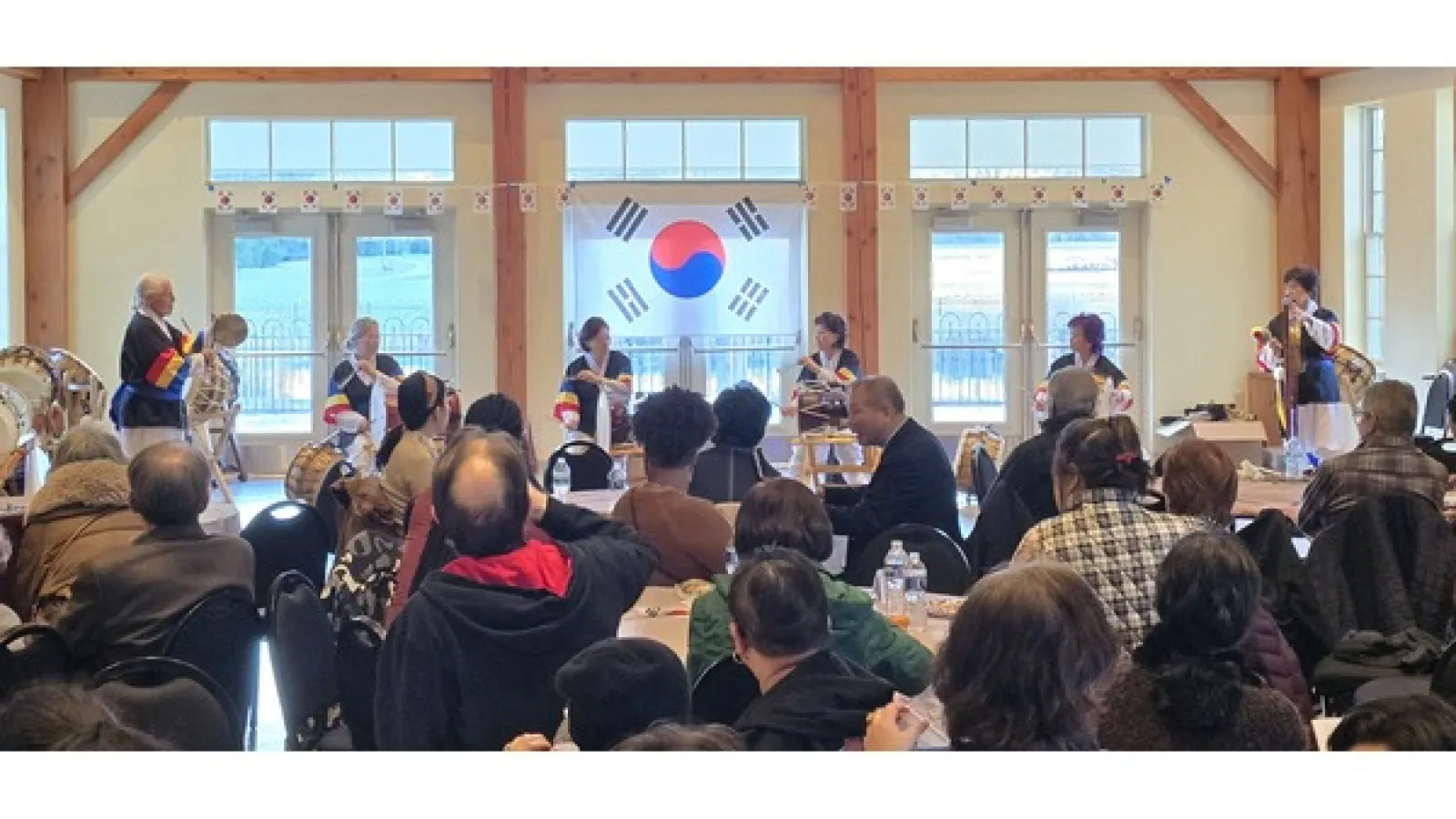
On March 1, the Taegeukgi also stood at the center of the Korean Independence Movement Day ceremony held in Columbus. As the Korean Declaration of Independence was read, the waving Taegeukgi brought a quiet but meaningful moment of reflection to those who attended. Organized by The Korean American Association of Columbus, OH (KAAC), the event brought together people from different generations to reflect on the meaning of independence and to talk about the future we share while living in Korea and in the wider world. Throughout the event, the Taegeukgi was present, and through that symbol people were reminded of where they came from.
Even today, the American flag flies naturally across many places in the United States. Seeing this, I find myself hoping that the Taegeukgi will also fly farther and shine more brightly in the world. At that moment, we quietly ask ourselves a question. What does this symbol mean to us? How well do we understand its meaning? And how will we pass it on to the next generation? Our feelings toward the Taegeukgi reflect respect for Korea’s history, culture, and the values and spirit of its people. In this way, the Taegeukgi continues to wave in the wind while sharing the story of Korea with the wider world.
Korean Heritage is a series of articles by Dr. Soon Ho Kim of the Korea Heritage Agency, who is a visiting scholar at Ohio State.