October 9 is Hangeul Day, a day to celebrate King Sejong's introduction of Hunminjeongeum. Hangeul is the writing system used to write the Korean language. It is part of everyday life in Korea, but today it is also used beyond Korea. More and more people around the world are learning Korean and Hangeul is reaching people across borders and cultures.
We can see this change in the United States, too. University students studying Korean try writing their names in Hangeul. We can also see Hangeul on menus at Korean restaurants and on Korean products in grocery stores. This interest often leads people to learn more about Korean culture and history. Hangeul is becoming an important way for people to discover and understand Korea.
But how did Hangeul begin? Its story began with King Sejong's desire to help his people.
During the Joseon Dynasty (1392-1897), it was difficult for ordinary people to write Korean using Chinese characters. King Sejong wanted to change this. He hoped to create a writing system that everyone could learn easily and use to express their thoughts. With this goal in mind, he created Hunminjeongeum, the original name for Hangeul, in 1443. It was officially introduced to the public in 1446.
Hangeul is a carefully designed writing system. The basic consonants were designed to reflect the shapes of the speech organs used to make sounds. Its vowels were based on three simple symbols: a dot (ㆍ) for the sky, a horizontal line (ㅡ) for the earth, and a vertical line (ㅣ) for people. The Hunminjeongeum Haeryebon is a historical document that explains why and how Hangeul was created. In 1997, UNESCO added this document to its Memory of the World Register because of its scientific and historical importance.
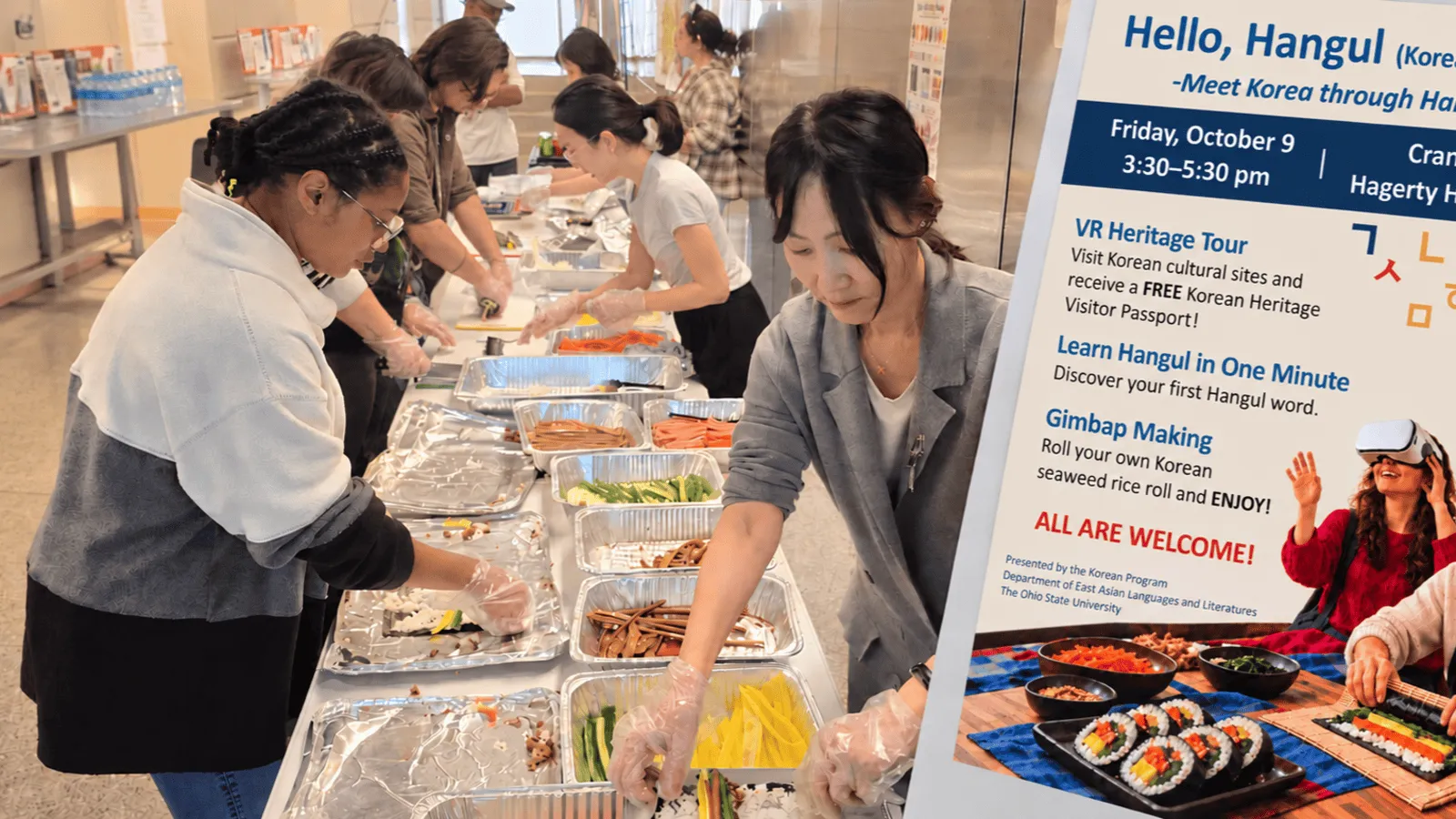
On October 9, the Korean Language Program at The Ohio State University held an event called "Hello, Hangul" to celebrate the 100th anniversary of the first celebration of what is now known as Hangeul Day. Students learned Hangeul and Korean words, made gimbap, and learned about Korean food culture. They also explored Korean cultural heritage through virtual reality (VR). Their curiosity about Hangeul gave them a chance to experience different aspects of Korean culture.
King Sejong dreamed of a world where more people could express their thoughts and communicate freely. Today, Hangeul helps people around the world discover Korea and understand one another. What began as a writing system for the Korean people has become a way for people around the world to connect. Even 580 years later, King Sejong's dream lives on through Hangeul.
Korean Heritage is a series of articles by Dr. Soon Ho Kim of the Korea Heritage Agency, who is a visiting scholar at Ohio State.