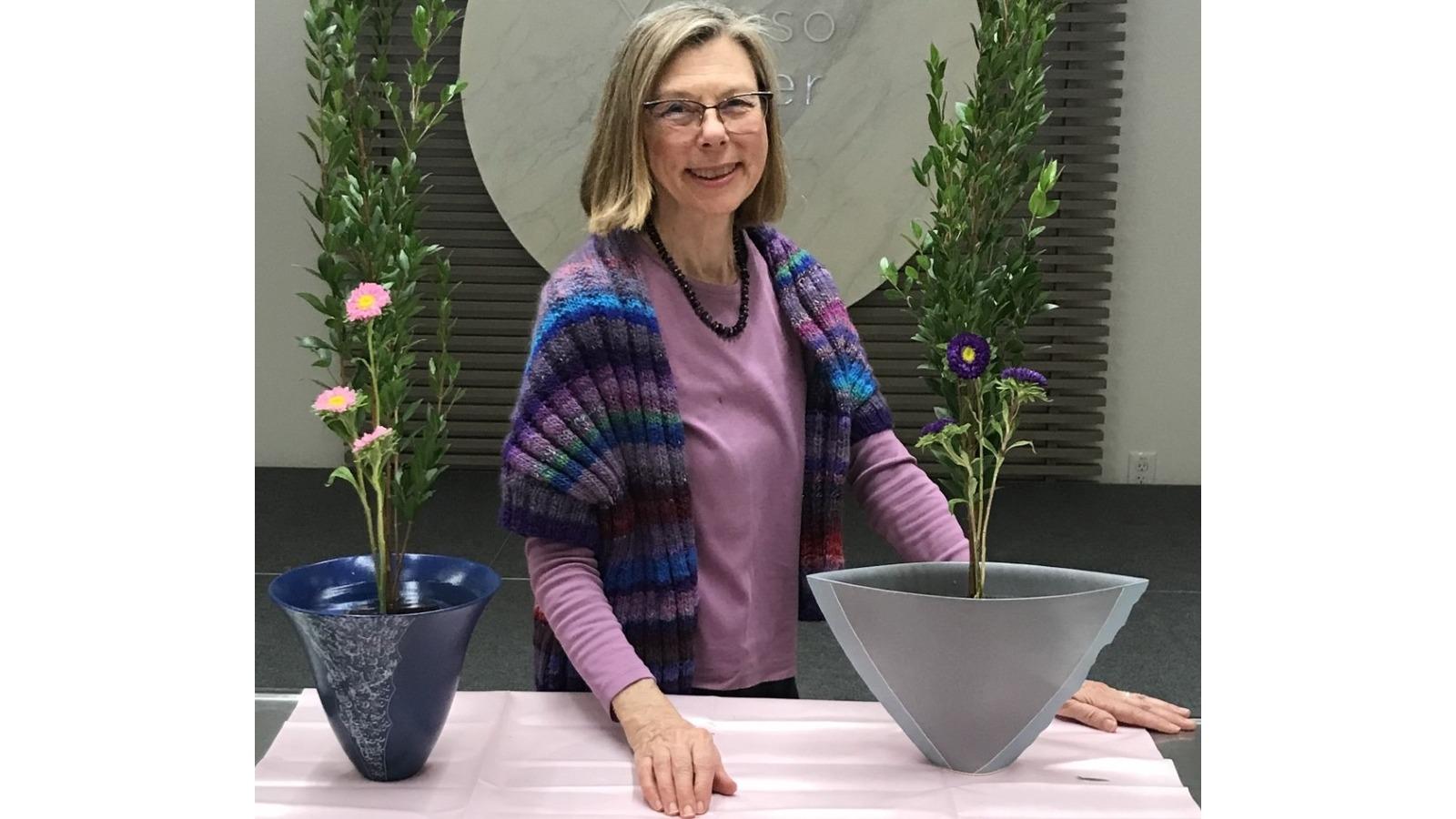
Ikebana, the Japanese art of flower arrangement, literally means "bringing flowers to life." Rooted in early Shinto and Buddhist practices, ikebana developed into a distinctive art form that emphasizes balance, seasonality, and the relationship between humans and nature. This presentation introduces the history, aesthetics, and fundamental principles of ikebana through examples from three major schools represented in the Columbus area: Ikenobō, Ohara, and Sōgetsu. Through photographs and a live demonstration, the audience will learn how different approaches to flower arrangement express both shared traditions and distinctive artistic philosophies. The session will also explore how ikebana reflects broader cultural values, including attentiveness to nature, seasonality, and
impermanence, that appear throughout East Asian literary and artistic traditions.
Virginia Kolberg Duym grew up in North Dakota and completed a B.A. in English and French at North Dakota State University in Fargo. After marriage to Wade Duym, a Navy officer, she received an M.A. at the University of West Florida and taught English while at various duty stations. She taught most recently in the English Department at Columbus State Community College until retiring in 2020. She has studied ikebana, beginning in Japan from the Ichiyō School, and for decades in the Ikenobō School from Japanese teachers here in the US. She has been teaching ikebana as the President of Ikenobō Ikebana Society, Ohio Chapter since 2018. She has exhibited her Ikenobō Ikebana at Franklin Park Conservatory, at the Greater Columbus Cherry Blossom Festival, and other venues.